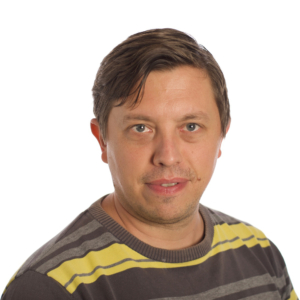
Dr Stephen Pierzchajlo successfully defended his thesis

Our now former PhD Candidate Stephen Pierzchajlo successfully defended his dissertation Smelling Without A Smell: How olfactory-perceptual representations are activated by words.

Abstract:

We spend every day using our senses to interact with the world. Though we use language as a way to understand the sensory world, language might have different roles for different senses. Freely identifying odors in naming tasks is more difficult than with senses like vision, making olfaction an interesting place to study the intersection between language and the senses. While free olfactory identification is poor, word cues strongly increase our ability to identify odors. This has led some to conclude that olfaction is more dependent on supporting information from other senses, and that odors are encoded in a coarse way, so it is particularly dependent on language and sensory cues to function capably. This has further led to debate regarding whether language can activate olfactory-related representations in the brain, or whether odor and language systems are disconnected. The general aim of this thesis was to investigate whether and how word cues can affect olfactory processes and representations.

You can find the dissertation here: https://su.diva-portal.org/

SCI-Lab at Neuroimaging Methods Symposium (NEMES) 2025

The first Neuroimaging Methods Symposium (NEMES) is an event aiming to establish a network of neuroimaging experts across Swedish institutions.

SCI-Lab made our presence with Malina Szychowska, William Fredborg and Teodor Jernsäther in attendance.

The symposium featured talks from experts, neuroimaging workshops and focused discussions – with the collective aim to address key challenges, means for more robust and reproducible research and hands-on analysis workshops.

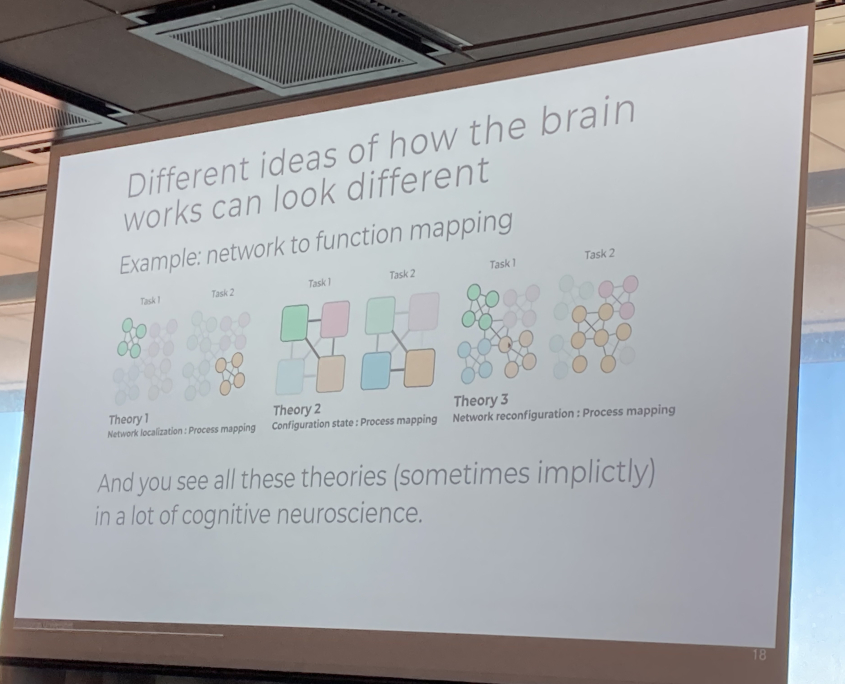
From the presentation ”Fundamentals of network theory”, by William Hedley Thompson, Gothenburg university

Thomas Hörberg at ECRO 2025

The European Chemoreception Research Organization (ECRO)’s yearly conference was in Bilbao, between the 15th – 18th September.

Thomas Hörberg presented Evaluating language models potential for capturing odor-perceptual and odor-semantic information” at the ”AI in the Olfactory Science” symposium. He also presented a poster on Odor naming as a tool for cognitive assessment.

New Intern Cecilia Salzmann

We extend our warm welcome to our latest intern Cecilia Salzmann from Zurich University!

She will be with us until June 2026, and help us with our VR and MR projects.


Thomas Hörberg initiates global multilab collaboration on odor vocabularies

Within the scope of the Global Consortium for Chemosensory Research (GCCR), Thomas Hörberg initiates a multilab research collaboration, encompassing over 30 laboratories in five different continents.

The aim of the project is to investigate linguistic diversity in odor language and to build a cross-linguistic odor lexicon. Towards this aim, the laboratories involved in the project will collect comprehensive odor-perceptual and odor-descriptive data from many different languages.

For information or questions, email Thomas at: thomas.horberg[a]psychology.su.se

Marie Low has accepted a PhD position

We congratulates Marie Low, has received and accepted a PhD-position!

She will be leaving the lab to join Tina Sundelin’s group (also at Stockholm University) in September 2025. Her phd-project will be about sleep and social behaviour.

Thomas Hörberg teaches at FLAVOURsome in Dresden

Thomas Hörberg taught PhD students and postdocs during the FLAVOURsome Advanced Training School in Dresden on the topic of ”Linguistic analyses of flavor”. At the end of the lecture, the students got to describe the flavors of ten different food items. A flavor space, a similarity matrix of the flavors, wasthen derived from their descriptions. A truly hands on experience of how language can be used to analyse and map flavors.


Frida Smids leaves the Lab to start PhD programme at KI

Today is Frida’s last day at the SCI-lab! Frida is starting a PhD position at the Karolinska Institute as part of the the Aging Research Center (ARC), with Erika Jonsson Laukka and her research team. Thank you Frida for your great contributions to our work, and good luck in the future!


Marta Zakrzewska wins national Junior Researcher award

The National committee for Psychology awards the best dissertation from all newly defended psychology dissertations in Sweden. This year, Marta Zakrzewska won with the dissertation ”Olfaction and prejudice: The role of body odor disgust sensitivity and disease avoidance in understanding social attitudes”. She did her PhD at the SCI-Lab with Jonas Olofsson as her main supervisor.

Her dissertation previously won the Department of Psychology’s (Stockholm university) best dissertation award. Today she works at RISE, after finishing a post doc at the Karolinska Institute.

The Committee motivation:

”Dr. Marta Zakrzewska tilldelas Nationalkommitténs pris till yngre forskare 2024 för sin imponerande och nyskapande forskning kring lukt och sociala fördomar. Med stor vetenskaplig noggrannhet och kreativ metodologisk bredd har Dr. Zakrzewska undersökt hur kroppsluktsaversion och sociala attityder samspelar inom ramen för det beteendemässiga immunsystemet. Genom att kombinera socialpsykologiska perspektiv med olfaktorisk forskning på ett unikt sätt har Dr. Zakrzewska belyst ett högaktuellt och originellt ämnesområde som både väcker nyfikenhet och har potential att intressera en bred publik.”


Marta Zakrzewska nails it! (her winning dissertation)

New Lab members, Marie Low and Frida Smids

Warm welcome to the new addition to our team – Marie Low!

She is our new Research Assistant to Malina Szychowska and her project on memory navigation: ”Navigating the Sensory Landscape: How Our Senses Shape Spatial Memories”

Marie just got her Masters degree in Psychology, at the Department of Psychology, Stockholm University, with the thesis titled: ”Emotion Recognition and Adult Aging: No Effect of Intranasal Oxytocin, but Sensory Modality Matters” (Supervisor: Håkan Fischer).

We’re happy to announce that our new research assistant, Frida Smids,

will join the lab. Frida will work with data collection in an ongoing study testing the effects of different sensory modalities in working memory training for older adults.

Frida has a Masters degree in Psychology from Lund’s University, titled Resting-state Functional Connectivity in Anhedonia: Exploring the Effects of Pramipexole (Supervisor Johannes Björkstrand. She is currently affiliated with Äldercentrum at the Karolinska Institute.