
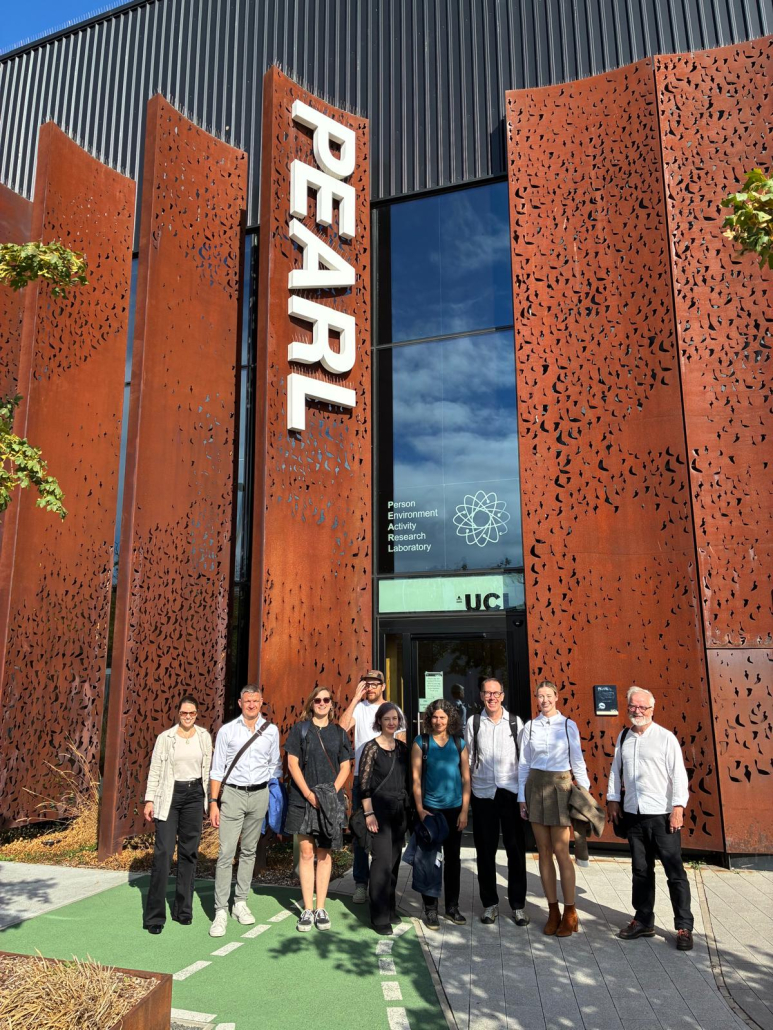
Malina is visiting Person-Environment-Activity Research Laboratory (PEARL)
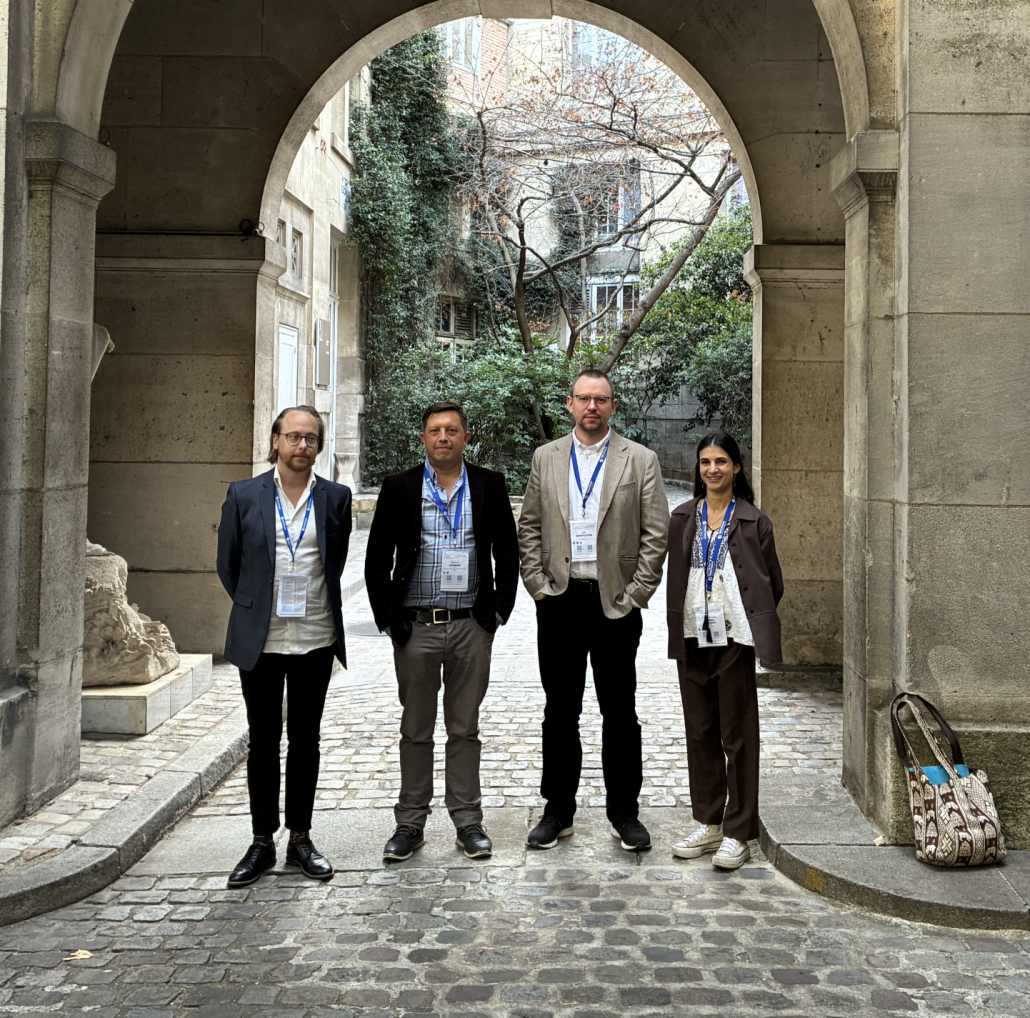
This week, Malina, together with colleagues from Stockholm University (SU), Karolinska Institutet (KI), and RISE, and Svenska kraftnät is visiting the Person-Environment-Activity Research Laboratory (PEARL) at University College London (UCL). The visit provides an opportunity to explore PEARL’s unique immersive research facilities, exchange ideas, and discuss potential avenues for future collaboration.
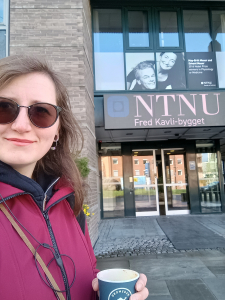
Malina visit our collaborator Tora Bonnevie in Trondheim
Last week Malina Szychowska travelled to Trondheim to visit our collaborator Tora Bonnevie and her research group at Kavli Institute for Systems Neuroscience. They discussed progress of the ongoing project and Malina was very happy to receive a lot of inspiring feedback and tips on fMRI data processing and analysis.
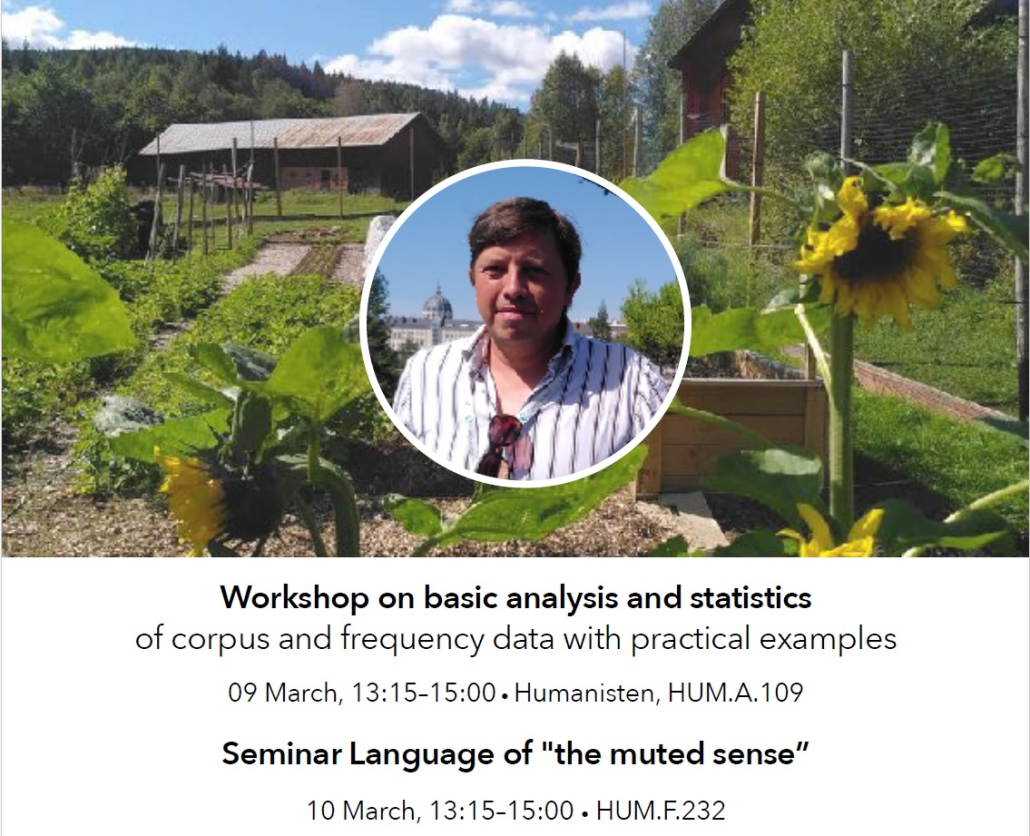
Thomas Hörberg visits Umeå to hold a workshop on odor and flavor vocabularies in English and other languages.
On Mars 9-10, at the Department of Language Studies, Umeå University, Thomas Hörberg held a statistics workshop and a seminar presenting his work on odor and flavor vocabularies in English and other languages.
We welcome Chloé Poirier-Blanchet
We welcome our new lab intern Chloé!
Chloé is with us on an exchange program for the spring semester. She is a master student from École Normale Supérieure and does the internship as part of the programme.
Thomas invited to talk at seminar
Thomas Hörberg presented his work on olfactory vocabularies at the higher seminar series of the Department of Swedish and Multilingualism, Stockholm University.
Find more info (Swedish) here: 2025-12-22 högre seminarie – nordiska-sprak.
New Lab member David Weber Fors
We welcome our new Lab member – David!
David will work in our sensory-memory navigation project as an in-house programmer for our Virtual Reality testing software and broaden our programming skills.
Stockholm University writes about our odor-language project
Thomas Hörberg leads an international project, trying to define and create a lexicon on odor descriptors.
When we talk about perceptions with language, we can use language with different levels of codability. This internatinal project is trying to find differences and similarities in codability of odor in different languages, and to create a lexicon of multicultural odor space.
Read the story on SU.se (Swedish)
Excerpt, translated by ChatGPT:
The researchers are collaborating with the Global Consortium for Chemosensory Research and are currently collecting data on olfactory vocabulary from nearly 30 languages. In an initial phase, the researchers selected more than 400 different odors representative of various olfactory qualities. Based on this, they made a narrower selection of 60 odors. These odors, in the form of so-called scent pens, are currently being sent to 30 selected laboratories in different parts of the world, where participants will be asked to describe and rate the odors.
“The goal has been to create a selection that is as representative as possible. Some smells are strongly associated with, for example, the smell of lemon, while others may not be as strongly linked to everyday objects.”
The material will provide the researchers with a much larger range and variation of languages, as well as more reliable results, since they are now using actual odors.
“The fact that we will also map the perceptual properties of the odors makes it much easier to explore how people in different cultures experience them. You could say that we will be compiling a kind of multicultural odor space,” says Thomas Hörberg.
People from different parts of the world will contribute to compiling this odor space by providing various evaluations of the smells. Based on the odor space and the participants’ descriptions of the odors, the researchers plan to compile a cross-cultural odor lexicon that can easily be translated between different languages. The olfactory vocabularies of different languages will be able to be compared systematically. This will provide new knowledge about the interplay between language, culture, and how we perceive smells.
Marta Zakrzewska’s award symposium
On 21 November 2025, at the Royal Swedish Academy of Sciences in Stockholm, we held a symposium celebrating our former PhD student Mart Zakrzewska.
The event, titled “The Psychology of Disease,” explored how illness shapes thoughts, feelings, behaviours, and social interactions.
The programme featured talks on:
-
Why some individuals react strongly to everyday sensory stimulation (Linus Andersson)
-
The different faces of feeling sick (Julie Lasselin)
-
Sex differences in pathogen disgust from an evolutionary perspective (Marco Tullio Liuzza)
-
How olfaction relates to social attitudes and prejudice (Marta Zakrzewska)
The symposium concluded with the award ceremony of the 2024 Young Researcher in Psychology Prize.

Marta’s award symposium
New Research Assistant
Billy joins us, working as a research assistant to help with running Thomas Hörberg’s project: ”Building a cross-cultural semantic framework for odor vocabularies.” Billy has a PhD in psychology from Stockholm University, on the neural correlates of consciousness in hearing, using EEG.